Address: Mumbai, , , 400053
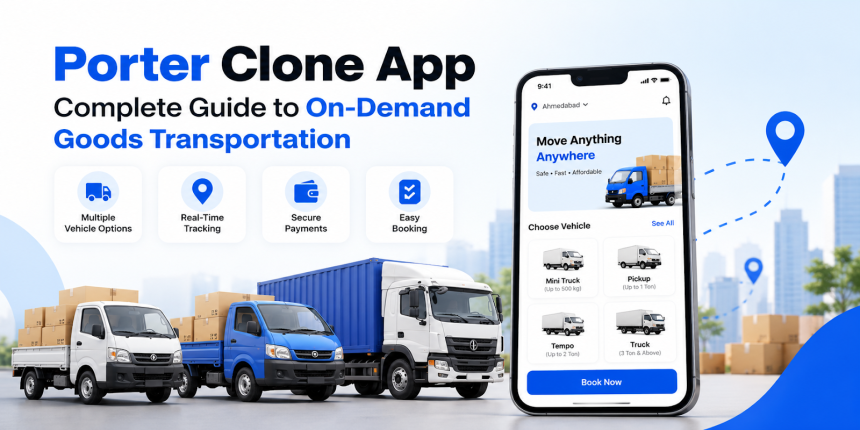
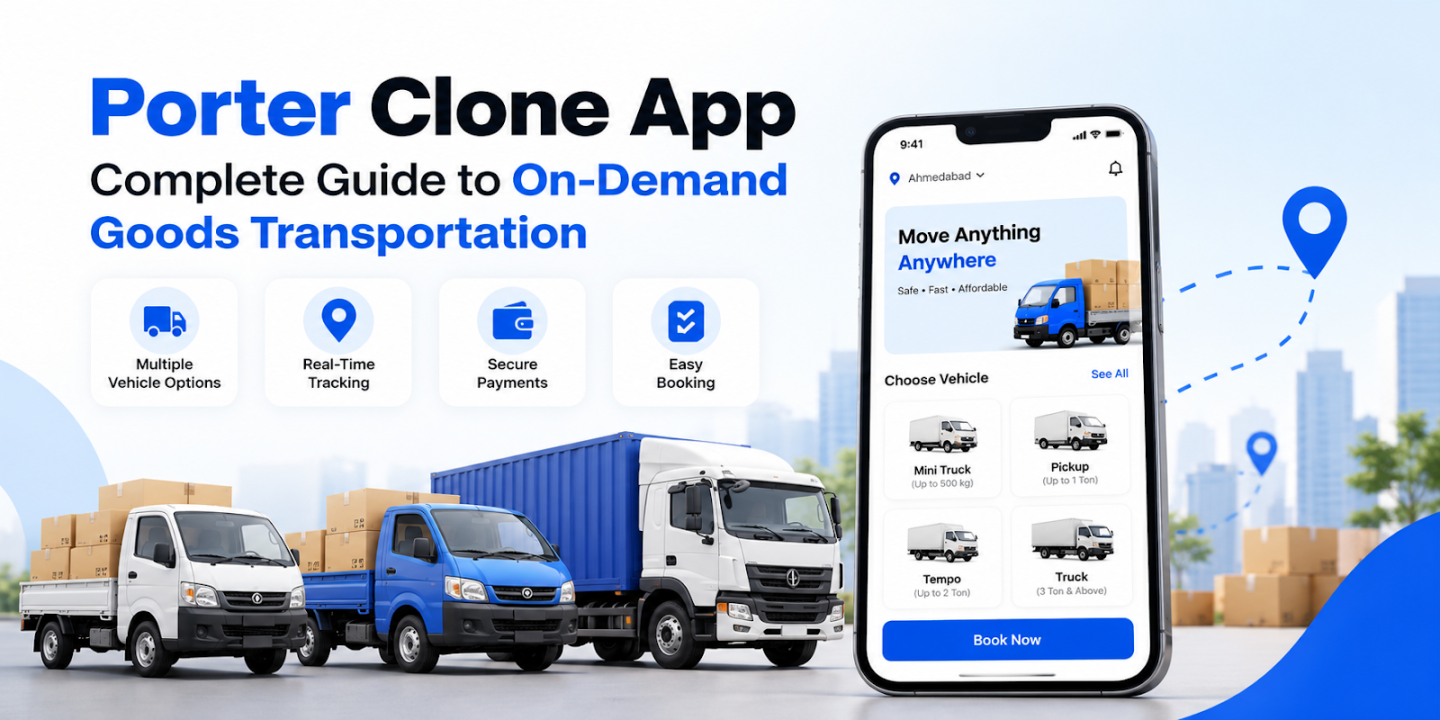
A Porter Clone App is an on-demand transportation platform designed to connect customers with drivers who can move goods, packages, furniture, appliances, and other items within a city or service area. It follows the same broad marketplace model used by leading logistics and intracity delivery services. Customers request a vehicle, share pickup and drop-off details, receive an estimated price, track the trip, and pay through the application. Drivers use a separate interface to discover available jobs, accept requests, navigate to locations, and receive earnings.
The demand for this model has grown because individuals and businesses want faster, more transparent, and more flexible transportation services. A customer may need to move a refrigerator, send stock from a warehouse to a retail store, transport construction material, or deliver a parcel across town. Traditional transport services often depend on phone calls, manual quotations, and uncertain arrival times. A well-designed clone app replaces much of that process with digital booking, automated dispatch, real-time tracking, and electronic payments.
However, building a successful Porter-style platform involves more than copying a familiar interface. The business needs a clear operating model, suitable vehicle categories, reliable driver onboarding, accurate pricing, strong location services, and effective customer support. This guide explains how a Porter Clone App works, its essential features, the development process, revenue models, estimated development costs, and key factors for building a successful on-demand goods transportation business.
A Porter Clone App is a ready-to-customize or purpose-built logistics marketplace that enables users to book vehicles and drivers for goods transportation. The term “clone” refers to a business model inspired by an established application, not the unauthorized duplication of its branding, source code, design assets, or proprietary technology. A responsible product should use its own brand identity and adapt the service to local customer needs, transportation regulations, and operational conditions.
The platform generally includes three connected applications or interfaces. The customer app allows people and businesses to create bookings and manage transportation requests. The driver app helps vehicle owners or professional drivers accept jobs and complete trips. The admin panel gives the business operator control over users, vehicles, fares, service zones, payments, promotions, complaints, reports, and platform settings.
The core value of the model is coordination. Customers receive access to nearby transportation capacity, while drivers receive a stream of relevant delivery or moving opportunities. The platform earns revenue by organizing these transactions, improving utilization, reducing manual coordination, and creating a more dependable experience for both sides of the marketplace.
The customer begins by entering the pickup location, destination, goods information, preferred vehicle type, and requested time. The app may ask for additional details such as item weight, dimensions, number of packages, floor level, elevator availability, loading assistance, and special handling requirements. These details help the system recommend a suitable vehicle and calculate a more accurate fare.
After the request is submitted, the platform identifies eligible drivers based on location, vehicle category, availability, service area, and job requirements. The system can send the request to one driver, a small group of nearby drivers, or all eligible drivers within a defined radius. A driver accepts the job, and the customer receives confirmation with driver details, vehicle information, estimated arrival time, and trip status.
The driver then navigates to the pickup point, verifies the order, loads the goods, and begins the journey. GPS tracking allows the customer and administrators to monitor progress. At the destination, the driver completes delivery after confirmation, which may involve a one-time password, digital signature, recipient confirmation, photo proof, or in-app status update. The final fare is processed, and both parties can rate the completed service.
A reliable Porter Clone App should be planned around the needs of each participant. The customer wants speed, accurate prices, safe handling, easy communication, and predictable service. The driver wants access to profitable jobs, clear instructions, efficient navigation, timely payments, and control over availability. The administrator needs visibility into every part of the operation so that problems can be resolved quickly.
The customer side should make booking simple for first-time users while providing advanced options for repeat customers and business accounts. Essential functions include registration, profile management, saved addresses, vehicle selection, fare estimation, booking confirmation, live tracking, payment, trip history, invoices, ratings, and support. A customer should also be able to cancel a request according to clearly displayed cancellation rules.
For goods transportation, the app should capture information that ordinary ride-booking platforms may not require. This can include package type, approximate size, total weight, loading instructions, number of helpers, fragile-item requirements, and delivery notes. A photo upload option can help the driver understand the cargo before arriving. Clear information at the booking stage reduces failed trips, disputes, and unexpected price changes.
The driver application should include secure registration, identity verification, vehicle document submission, service category selection, availability controls, job alerts, route navigation, earnings tracking, and customer communication. Drivers should be able to accept or reject requests within a defined response period and view important job details before accepting.
The app can also support start-trip and end-trip controls, delivery proof, digital signatures, issue reporting, incentive notifications, and payout requests. A driver earnings section should show completed trips, commissions, bonuses, penalties, adjustments, and net income. Transparent earnings information improves trust and helps the platform retain reliable drivers.
The admin panel is the operational center of the business. Administrators can approve customer and driver accounts, review documents, manage vehicle categories, configure service areas, adjust pricing rules, assign or reassign trips, monitor active rides, and resolve disputes. They can also suspend accounts, issue refunds, create promotional campaigns, and manage content displayed in the apps.
Analytics are equally important. Administrators should be able to review booking volume, acceptance rates, cancellation rates, average delivery time, driver utilization, customer retention, revenue, support response times, and service performance by location. These reports help operators identify profitable zones, weak supply areas, pricing problems, and recurring customer complaints.
A platform may begin with a focused minimum viable product and expand as demand becomes clearer. The first version should support the complete booking lifecycle without adding unnecessary complexity. At a minimum, it needs user registration, location search, vehicle selection, fare estimation, driver matching, booking management, GPS tracking, payments, notifications, ratings, and administrative controls.
Maps are central to the experience because the platform must identify addresses, calculate routes, estimate distance, and display driver movement. Integration with a reliable mapping service supports location autocomplete, geocoding, route drawing, navigation, and estimated arrival times. The business should monitor map usage costs and define service boundaries to prevent bookings outside its operating area.
The app should also handle real-world location challenges. Customers may enter incomplete addresses, industrial areas may lack precise map points, and apartment buildings may have multiple entrances. Features such as map pin adjustment, landmark notes, phone contact, and pickup instructions can improve successful collection rates.
Tracking gives customers confidence that their goods are moving as expected. The customer should see driver location, trip status, estimated arrival time, pickup progress, and delivery completion. Administrators need a similar view, with filters for delayed, unassigned, active, and disputed trips.
In-app chat and masked calling can help customers and drivers coordinate without exposing personal phone numbers. Communication should be monitored through appropriate privacy and safety policies. Automated notifications by push message, SMS, or email should cover booking confirmation, driver assignment, arrival, trip start, delivery completion, payment status, and support updates.
A Porter Clone App can support cards, mobile wallets, bank transfers, cash, or regional payment methods. The payment system should authorize or collect money according to the business model and release driver earnings after successful completion or dispute review. Failed payments, refunds, partial refunds, promotional credits, and invoice generation should be considered during development rather than added later.
For business customers, invoicing features can be especially valuable. Companies may need monthly statements, tax information, purchase order references, multiple employee accounts, spending limits, and centralized payment. These tools can turn occasional users into high-frequency commercial accounts.
Goods transportation often requires more evidence than ordinary passenger trips. The platform can support pickup photos, delivery photos, recipient signatures, one-time passwords, package condition notes, and timestamps. These records help establish what happened during the service and can reduce disagreements between customers, drivers, and the platform.
Proof features should be designed for speed. Drivers should not need to complete a lengthy form while standing at a busy pickup location. A short guided workflow with mandatory fields only when needed can maintain operational efficiency while preserving useful records.
A transportation marketplace should offer vehicle options that match local demand. Common categories include motorcycles for small packages, hatchbacks for light goods, mini trucks for household items, pickup trucks for medium loads, and larger commercial vehicles for bulk transportation. The available categories should reflect road conditions, parking availability, licensing requirements, and the types of goods customers commonly move.
The app can also offer service variations. Examples include point-to-point delivery, scheduled transportation, multi-stop delivery, office relocation, household moving, warehouse transfers, business delivery subscriptions, and transport with loading assistance. Each service type may require separate pricing, driver qualifications, equipment, and terms of service.
The business should avoid offering too many categories at launch. A smaller selection is easier to explain, price, and operate. After analyzing booking data, the company can add categories that solve a clear customer problem or improve marketplace coverage.
Pricing is one of the most important parts of the platform. A basic fare may combine a base charge, distance fee, time fee, vehicle fee, loading assistance fee, waiting fee, tolls, taxes, and platform commission. The fare estimate should be shown before confirmation whenever possible. If the final amount can change because of waiting time, extra stops, route changes, or additional goods, the app should explain those rules clearly.
The platform may use fixed pricing, distance-based pricing, zone-based pricing, or dynamic pricing. Fixed pricing is easy for customers to understand but may not reflect traffic and operating costs. Distance-based pricing is more flexible, while zone pricing can work well in cities with predictable service areas. Dynamic pricing can balance supply and demand, but sudden price changes may create distrust unless they are communicated transparently.
Dispatch logic should consider more than physical proximity. A driver may be close but unavailable, carrying another order, operating the wrong vehicle, or unable to handle the goods. Matching can consider distance, vehicle capacity, driver rating, acceptance history, service category, working hours, and customer preferences. A well-designed system can improve acceptance rates while reducing driver travel before pickup.
Driver supply directly affects customer experience. The platform should create a structured onboarding process that verifies identity, driving credentials, vehicle registration, insurance where applicable, bank details, and other local compliance documents. Document expiration alerts can prevent drivers from continuing to operate with outdated records.
Training should cover app usage, customer interaction, loading safety, prohibited goods, delivery proof, complaint handling, and emergency procedures. Drivers should understand how pricing works, when they receive payments, how cancellations affect them, and how disputes are reviewed. Clear policies reduce confusion and support consistent service quality.
Quality management should combine ratings with objective indicators. A low rating may be caused by traffic or a customer issue, while repeated late arrivals, unexplained cancellations, damaged goods claims, or suspicious GPS activity may require deeper review. The platform can use performance dashboards, coaching, temporary restrictions, and incentive programs to encourage dependable behavior.
A goods transportation platform must follow laws related to transportation, employment or contractor relationships, consumer protection, payments, taxation, and personal data. Requirements vary by country and city, so legal research should happen before launch. The operator may need business licenses, commercial vehicle permits, insurance coverage, terms for prohibited items, and processes for handling customer claims.
Safety policies should address vehicle suitability, loading limits, dangerous goods, driver identity, customer verification, emergency contact, and accident reporting. The platform should provide a clear way to report unsafe behavior or damaged goods. Insurance options may include driver coverage, cargo protection, third-party liability, or optional customer protection depending on the service model.
Data security is also essential. The application may process names, phone numbers, addresses, identity documents, payment information, trip history, and location data. Security practices should include encryption, role-based administrative access, secure authentication, audit logs, payment tokenization through reputable providers, regular testing, and a clear privacy policy. Sensitive information should be retained only for as long as business and legal requirements demand.
The technology stack depends on the product scope, expected traffic, development team, and target markets. Cross-platform frameworks can reduce the time needed to create customer and driver apps for multiple mobile operating systems. Native development may be appropriate when the platform needs advanced background location behavior, complex device integration, or highly customized performance.
A typical backend may include an application server, relational or document database, real-time communication layer, payment gateway, mapping service, notification system, file storage, analytics tools, and administrative dashboard. APIs should be organized so that future features, partner integrations, and additional regions can be added without rewriting the entire system.
Development should proceed in stages. Product discovery defines customer segments, service categories, pricing, regulations, and operating zones. User experience design then maps booking, driver, payment, and support flows. The development team builds the core marketplace, connects external services, tests critical scenarios, and prepares the launch infrastructure. After launch, usage data and support feedback guide the next releases.
The cost of a Porter Clone App depends on whether the business purchases a configurable solution, licenses an existing platform, or commissions a custom application. A ready-made solution may have a lower initial cost and faster launch time, but its customization options, scalability, integrations, and ownership terms must be reviewed carefully. Custom development usually requires a larger investment but offers more control over workflows, branding, data architecture, and future expansion.
Major cost factors include the number of apps, design complexity, location and tracking requirements, payment integrations, admin functionality, driver verification, business accounts, analytics, security, testing, and post-launch support. The geographic market also affects cost because local payment methods, languages, currencies, taxes, and transportation rules may require additional work.
Businesses should budget for continuing expenses, not only initial development. These may include cloud hosting, map and SMS fees, payment processing, customer support, security monitoring, software maintenance, driver acquisition, insurance, marketing, and compliance. A realistic financial plan compares total operating costs with expected booking frequency, average order value, commission, and customer retention.
The most common revenue model is a commission charged on each completed booking. The platform may deduct a percentage from the customer fare, the driver earnings, or both. Another option is a fixed service fee added to each booking. The right approach depends on local competition, price sensitivity, driver expectations, and the level of value the platform provides.
Additional revenue streams can include surge or priority booking fees, cancellation charges, business subscriptions, delivery memberships, advertising placements, partner promotions, packing services, loading assistance, and insurance-related service fees. Corporate customers may pay a monthly platform fee for reporting, account controls, dedicated support, and negotiated pricing.
Revenue decisions should protect marketplace health. Excessive commissions can cause drivers to leave or raise prices for customers. Very low fees may generate bookings but fail to cover support, technology, and acquisition costs. Regular analysis of contribution margin, repeat usage, driver earnings, and customer lifetime value is necessary before changing the pricing model.
A successful launch should begin with a limited service area rather than an entire city. Concentrating drivers and customers in a defined zone improves availability, reduces pickup times, and makes marketing more efficient. Early customer segments may include small retailers, online sellers, offices, households, restaurants, and local wholesalers that already have frequent transportation needs.
Marketing can combine search engine optimization, paid search, social media, local partnerships, referral programs, business outreach, and driver recruitment campaigns. The message should focus on specific benefits such as transparent fares, fast vehicle access, reliable tracking, or business delivery management. Generic claims are less persuasive than clear use cases supported by actual service performance.
Before expanding, the operator should track key indicators such as completed bookings, booking conversion rate, average order value, driver acceptance, cancellation rate, average pickup time, repeat customer rate, support tickets, and contribution margin. These metrics reveal whether growth is healthy or whether the platform is acquiring users faster than it can serve them.
A Porter Clone App can create a practical digital marketplace for local goods transportation, household moving, commercial deliveries, and scheduled logistics. Its success depends on connecting the right customers and drivers, not simply reproducing the appearance of an existing application. The platform must make booking easy, provide accurate estimates, support suitable vehicles, protect users, and give administrators strong operational control.
The best development strategy is to start with a focused service model, validate demand in a defined market, and improve the product using operational data. A strong minimum viable product should cover booking, dispatch, tracking, payment, delivery confirmation, support, and compliance. Once the marketplace demonstrates reliable service and healthy unit economics, advanced capabilities such as business accounts, route optimization, subscriptions, multi-stop delivery, and automated pricing can be introduced.
With careful planning, local market research, dependable technology, and consistent driver management, a Porter Clone App can become more than a delivery booking tool. It can serve as a scalable transportation platform that helps households and businesses move goods with greater convenience, visibility, and control.
A Porter Clone App is an on-demand goods transportation platform that connects customers with drivers and suitable vehicles for moving packages, furniture, appliances, commercial goods, and other items. It allows users to book transportation, share pickup and drop-off locations, view estimated fares, track trips, and make payments online.
A Porter Clone App should include customer registration, vehicle selection, instant booking, fare estimation, real-time GPS tracking, secure payments, booking history, notifications, and customer support. Driver features may include job acceptance, navigation, earnings tracking, and trip management, while an admin dashboard helps manage users, drivers, vehicles, bookings, and payments.
A Porter Clone App can generate revenue through commissions on completed bookings, delivery or service fees, business accounts, subscription plans, and additional services. The actual revenue model depends on the target market, vehicle categories, pricing strategy, operating costs, and customer demand.
The cost of developing a Porter Clone App depends on its features, platform compatibility, UI/UX design, technology stack, GPS integration, payment systems, and administrative tools. A basic solution generally costs less than a customized platform with advanced tracking, automated dispatch, multiple vehicle categories, and business management features. A detailed project scope is needed for an accurate estimate.
Entrepreneurs can start by researching local transportation demand, identifying target customers, choosing suitable vehicle categories, and planning a revenue model. They should then select an app development solution, onboard verified drivers, configure service areas and pricing, test booking and payment workflows, and launch with reliable customer support. Monitoring delivery performance and customer feedback can help improve operations and support future expansion.

Upto 6 month of service

100% certified professionals

Upto $5,000 against damages
Copyright © 2024 Digital Marketing Deal. All rights reserved.