
Address: 119 A, DLF Star Tower, Sector 30, Gurgaon, Gurgaon, Haryana, 122001
In today’s fast-paced business environment, efficiency and communication are everything. Whether you’re operating out of a startup office, a multinational corporate headquarters, or a co-working space, one daily challenge remains universal: managing meeting rooms. Double bookings, forgotten reservations, and the dreaded “is this room free?” moment can seriously impact productivity.
Enter digital room signage, a modern, efficient solution that is transforming how organizations handle shared spaces. Also known as meeting room digital signage or conference room digital signage, this technology offers real-time visibility, scheduling ease, and improved communication across the workplace.
In this article, we’ll explore the growing role of digital room signage, how it works, its key benefits, and how to implement it for maximum impact.
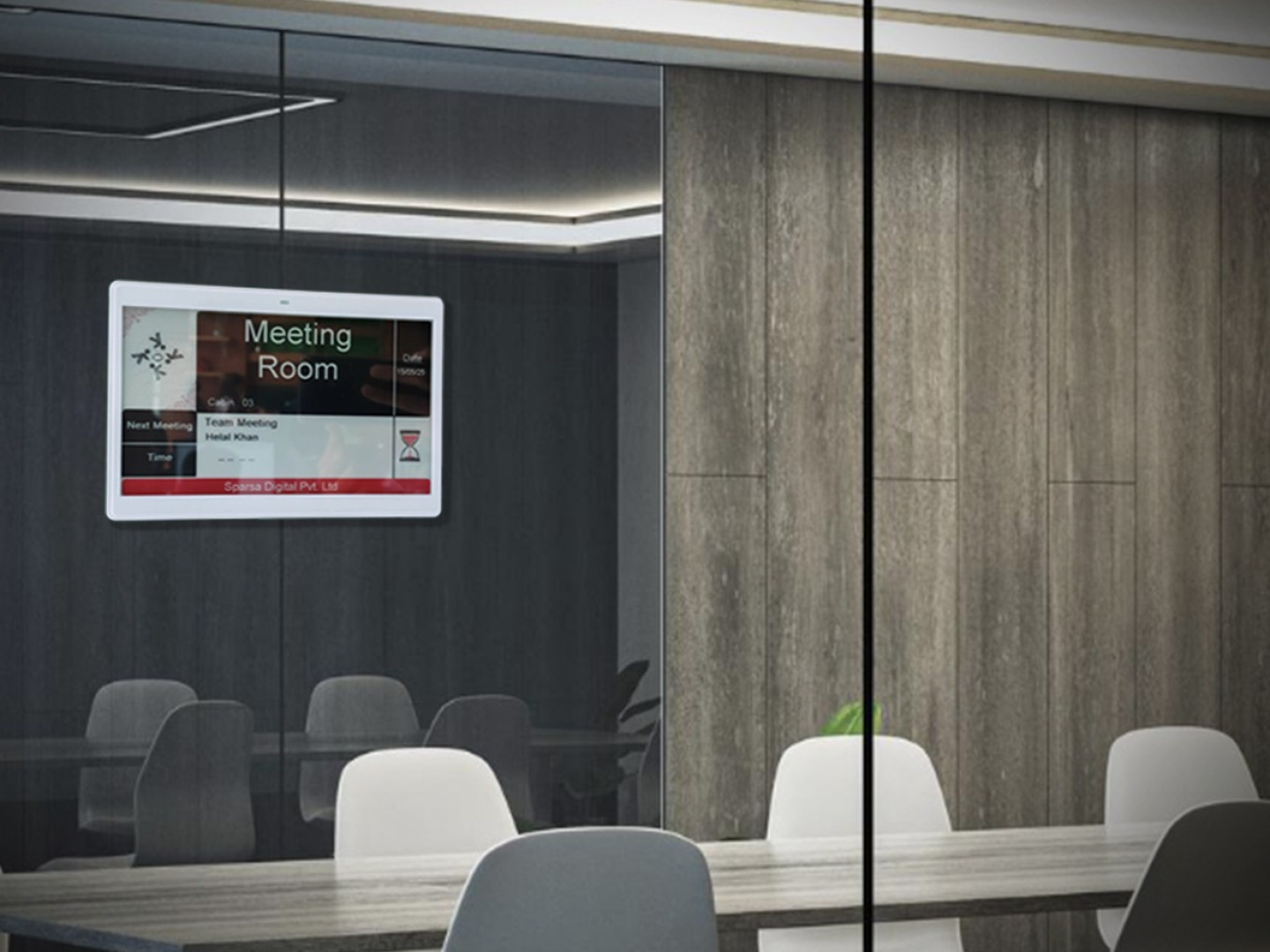
Digital room signage refers to electronic displays, typically mounted outside meeting rooms that show real-time information about the room’s schedule, availability, and current or upcoming bookings.
The screens allowing users to make on-the-spot bookings, cancel meetings, or check the room’s status at a glance. From sleek LCD displays to tablets or e-ink panels, these signs bring a high-tech polish to any office environment.
Imagine walking into a conference room for your client call, only to find a team already in session, both parties claiming to have it booked. With meeting room digital signage, these issues become a thing of the past. Everyone can see who booked the room, for how long, and what’s coming up next.
Conference room digital signage creates a culture of transparency. Employees can instantly verify room usage, reducing the guesswork and tension around room reservations.
Planning a quick meeting? Just tap your phone via NFC and reserve a room on the spot.
Real-time analytics can show how often rooms are used, which ones are most popular, and where improvements are needed. Many systems allow integration with occupancy sensors to automatically free up unused rooms.
Modern signage adds a polished, high-tech look to office interiors. You can even customize displays with your company logo, colors, or welcome messages for visiting guests.
If you’re in the market for conference room digital signage, look for these core features:
Streamline operations across multiple floors or buildings. Employees can quickly identify open rooms and reserve them with minimal disruption.
Co-working environments thrive on flexibility. Digital room signage helps manage shared spaces and improves communication between rotating teams.
Lecture halls, seminar rooms, and study pods can all benefit from digital room signage to prevent overlap and ensure proper space allocation.
Display real-time updates for event spaces, ballrooms, and breakout rooms. Offer guests a seamless, professional experience.
Secure environments benefit from signage that confirms availability without revealing sensitive meeting titles or attendee names.
Options range from tablets (e.g., iPads or Android devices) to commercial-grade digital signage systems or e-ink panels for low-power environments.
Choose software that integrates with your current systems. Popular options include:
Mount the devices outside each room. Provide training to ensure staff know how to book rooms directly from the panel or their calendars.
Review usage data monthly to identify underused rooms, peak times, or no-show rates. Use this data to optimize your space.
Make sure your signage system can cache data offline and update as soon as a connection is restored.
Tablets and displays can be pricey at scale. Start with your most-used rooms and expand gradually.
Offer simple onboarding and reminders. Once employees see the benefits, adoption tends to grow organically.
Absolutely. Most solutions allow for branded colors, logos, and welcome messages.
Most systems need a stable connection for real-time updates, but many can retain and display cached data during short outages.
Very secure. These systems typically follow enterprise-level security protocols, with encrypted communication and limited access roles.
Yes, if integrated with occupancy sensors, the signage can reflect actual room usage, even freeing up rooms if no one checks in.
Options include commercial-grade tablets, wall-mounted displays, or dedicated e-ink screens for long battery life and minimalist design.
Yes. Some systems integrate with video conferencing tools (like Zoom or Teams) to indicate both physical and virtual meeting details.
In the modern workplace, efficient space management isn’t just a convenience, it’s a necessity. With digital room signage, organizations can streamline meeting room bookings, improve communication, reduce scheduling conflicts, and present a professional, tech-forward image to both employees and visitors.
Whether you’re outfitting a corporate headquarters, a university, or a shared office, meeting room digital signage is a smart, scalable solution that pays dividends in productivity and user satisfaction. From high-touch touchscreen panels to minimalistic e-ink displays, the future of room management is digital, and it starts at the door.

Upto 6 month of service

100% certified professionals

Upto $5,000 against damages
Copyright © 2024 Digital Marketing Deal. All rights reserved.