
Address: Gate no 5, Backside Entry) CCD Building, A-10, 3rd Floor, Firoz Gandhi Marg, opp. Lajpat Nagar Metro Station, Lajpat Nagar II, New Delhi, Delhi 110024, Delhi, Delhi, 110024
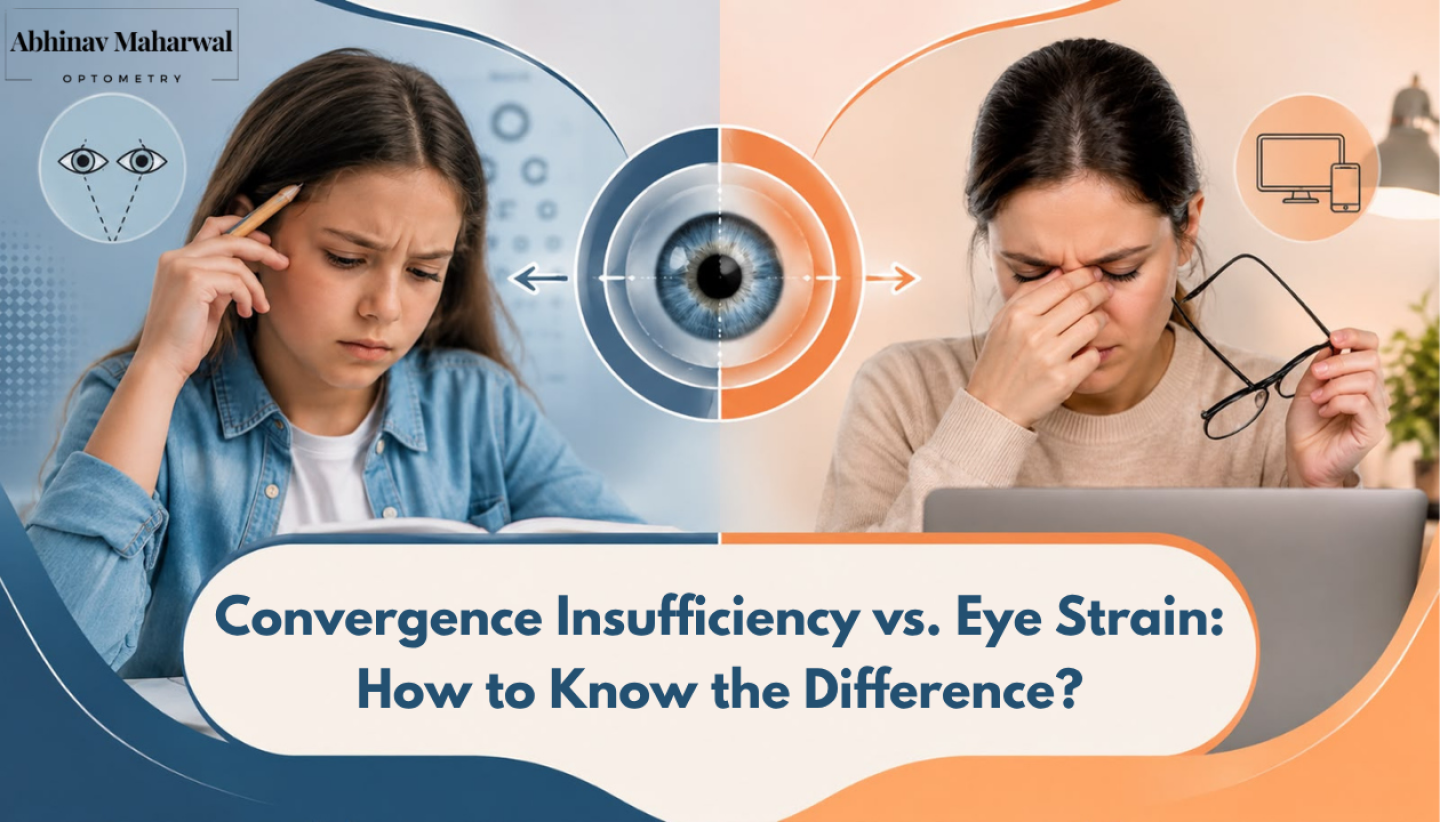
Eye discomfort during reading, computer work, or other close-up activities is common, but the underlying cause is not always the same. Convergence Insufficiency and eye strain can produce similar symptoms, such as tired eyes, headaches, blurred vision, and difficulty concentrating. However, they are different conditions and may require different approaches to management. Understanding the difference can help you recognize when occasional visual fatigue may need further evaluation. If symptoms continue despite taking regular breaks or reducing screen time, a comprehensive eye examination can help identify whether an underlying binocular vision problem is contributing to your discomfort.
Convergence Insufficiency is a binocular vision condition in which the eyes have difficulty working together to maintain proper alignment when focusing on nearby objects. Normally, both eyes turn inward and coordinate with each other when reading, writing, using a smartphone, or performing other near tasks.
People with convergence insufficiency may experience symptoms particularly during prolonged close-up work. Common signs include double or blurred vision, headaches, eye fatigue, difficulty reading, losing their place while reading, or reduced concentration. Children may avoid reading or complain that words appear to move or become uncomfortable after a period of near work.
Eye strain, sometimes called visual fatigue, refers to discomfort or tiredness that can occur when the eyes are used for prolonged periods. It is commonly associated with extended screen use, reading, poor lighting, glare, inadequate viewing distance, or prolonged concentration.
Symptoms can include tired or sore eyes, dryness, watering, blurred vision, headaches, and difficulty maintaining visual focus. Eye strain may improve after resting the eyes, taking breaks, adjusting lighting, or changing screen habits.
Although the symptoms can overlap, there are some useful differences to consider:
Convergence Insufficiency: Primarily involves difficulty coordinating the two eyes during near vision.
Eye Strain: Often results from prolonged visual tasks or environmental and viewing factors.
Convergence Insufficiency: Symptoms may repeatedly occur during reading or other close-up activities.
Eye Strain: Discomfort may improve significantly with rest and appropriate screen habits.
Convergence Insufficiency: May require specific binocular vision assessment.
Eye Strain: May be managed by addressing visual habits, ergonomics, lighting, and rest, depending on the cause.
Because the symptoms overlap, it is not always possible to determine the cause based on symptoms alone.
Occasional eye fatigue after a long day is usually different from persistent or recurring visual problems. Consider an eye examination if you regularly experience headaches while reading, double vision, difficulty focusing on nearby objects, frequent loss of place while reading, eye discomfort during close work, or symptoms that continue even after taking breaks.
Children who struggle with reading or avoid close-up activities may also benefit from an evaluation, particularly when symptoms repeatedly occur during schoolwork.
A routine vision test may not always identify every binocular vision problem. A more detailed assessment may evaluate how well the eyes work together, near point of convergence, eye movements, focusing ability, and binocular vision.
The evaluation helps determine whether symptoms are related to convergence insufficiency, focusing difficulties, refractive errors, or another visual problem. Identifying the underlying cause is important before deciding on an appropriate management approach.
Management depends on the underlying cause and the individual's visual needs. For some people with Convergence Insufficiency, structured vision therapy may be recommended to improve eye coordination and binocular visual skills.
For general eye strain, practical measures such as taking regular breaks, maintaining an appropriate viewing distance, reducing glare, using suitable lighting, and ensuring an accurate prescription can be helpful. However, persistent symptoms should not simply be attributed to screen use without proper evaluation.
If eye discomfort is frequent, affects reading or work, or is accompanied by double vision, persistent blurred vision, headaches, or difficulty coordinating the eyes, professional assessment is recommended. This is particularly important when symptoms interfere with school, work, or daily activities.
Understanding whether you are experiencing ordinary visual fatigue or a condition such as <a href="https://abhinavmaharwal.com/convergence-insufficiency/">Convergence Insufficiency</a> can help you receive more appropriate care rather than relying only on home remedies or screen breaks.
Convergence Insufficiency and eye strain can feel similar, but they are not the same problem. Eye strain may often be associated with prolonged visual tasks and improve with appropriate rest and visual habits, while <a href="https://abhinavmaharwal.com/convergence-insufficiency/">Convergence Insufficiency</a> involves difficulty coordinating the eyes during near vision. If symptoms are persistent or repeatedly affect reading, screen use, or concentration, a comprehensive binocular vision assessment can help determine the underlying cause and guide suitable management.

Upto 6 month of service

100% certified professionals

Upto $5,000 against damages
Copyright © 2024 Digital Marketing Deal. All rights reserved.