
Address: india, Hyderabad, Telangana, 40001
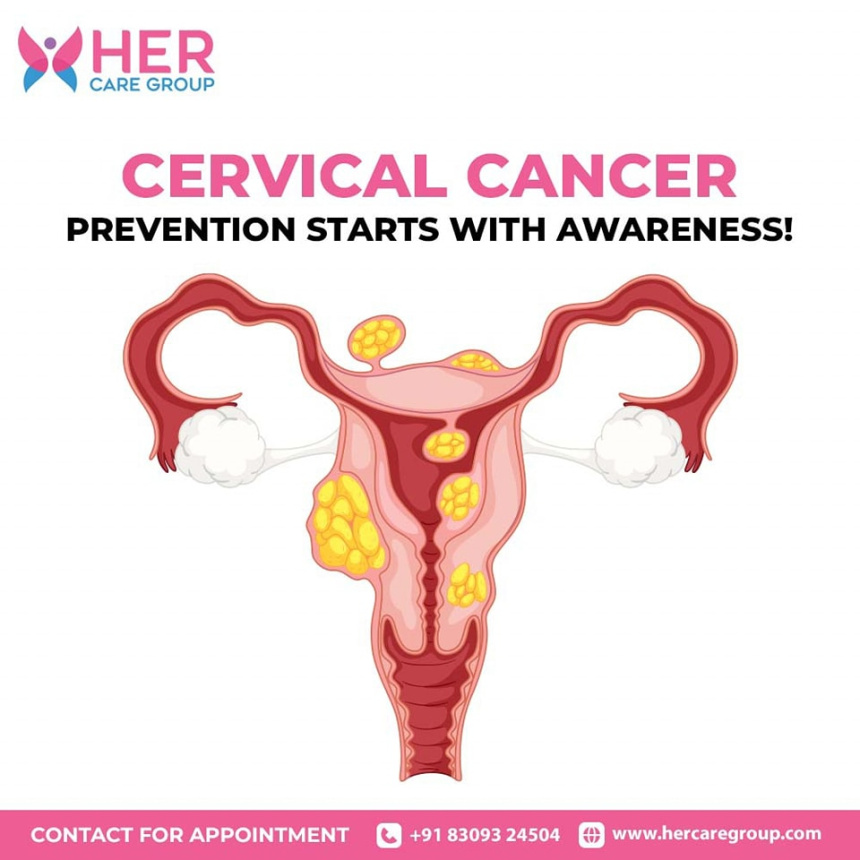
Cervical cancer develops in a woman's cervix (the entrance to uterus from the vagina). All the cervical cancer cases are linked to the high-risk human papillomaviruses (HPV), an extremely common virus transmitted through sexual contact. Although most infections with HPV resolve spots spontaneously and cause no symptoms, persistent infection can cause cervical cancer in women. Before women appear in the cervix, the cells of the cervix go through changes known as dysplasia, in which abnormal cells begin to appear in the cervical tissues.
The cervix has two main parts:
The ectocervix (also called exocervix) is the outer part of the cervix that can be seen during a gynecological exam. The ectocervix is covered with thin, flat cells called squamous cells.
The endocervix is the inner part of the cervix that forms a canal that connects the vagina to the uterus. The endocervix is covered with column-shaped glandular cells that make mucus.
Types of cervical cancer
Cervical cancer is divided into two types based on the type of cell the cancer begins.
Squamous cell carcinoma: Most cervical cancers (up to 90%) are squamous cell carcinomas. These cancers develop from cells in the ectocervix.
Adenocarcinoma: This type of cervical cancer begins in the column-shaped glandular cells in the endocervix.
Symptoms
At the beginning cervical cancer might not show any symptoms. As the cancer grows the signs and symptoms might appear.
Blood spots or light bleeding between or following periods.
Menstrual bleeding that is longer and heavier than usual
Increased vaginal discharge.
Pain during sexual intercourse
Bleeding after menopause
Unexplained, persistent pelvic and/or back pain
Causes
Long lasting virus infection caused by human papillomavirus is the main cause of cervical cancer. HPV virus infection is a common virus that is passed through sexual contact. For most people, the virus never causes problems. It usually goes away on its own. For some, though, the virus can cause changes in the cells that may lead to cancer.
Risk Factors
Smoking tobacco, sexually transmitted infections, weak immune system, and Exposure to miscarriage prevention medicine are the risk factors that induce cervical cancer.
Diagnosis
Screening tests
Pap smear test: This test involves collecting cells from the cervix. Detecting cervical cancer early with a pap smear test gives a great chance for cure.
HPV DNA testing: This test involves scraping of cells from the cervix to look for high-risk human papillomaviruses (HPV) strains in the DNA.
Advance stage tests
Colposcopy is a procedure in which the health care provider inserts a speculum to gently open the vagina and view the cervix. A vinegar solution will be applied to the cervix to help show abnormal areas. The health care provider then places an instrument called a colposcope close to the vagina. It has a bright light and a magnifying lens and allows the health care provider to look closely at the cervix. A colposcopy usually includes a biopsy.
Biopsy is a procedure in which a sample of tissue is removed from the cervix so that a pathologist can view it under a microscope to check for signs of cancer. The following types of biopsies are used to check for cervical cancer.
Punch biopsy is a procedure in which a small, round piece of tissue is removed using a sharp, hollow circular instrument.
Endocervical curettage is a procedure to collect cells or tissue from the cervical canal using a curette, a small, spoon-shaped instrument, or a thin brush to scrape a tissue sample from the cervix.
Loop electrosurgical excision procedure (LEEP) uses a thin wire loop through which a low voltage electrified current is passed, to remove tissue from the cervix.
Cone biopsy is surgery to remove a larger, cone-shaped piece of tissue from the cervix and cervical canal. It also may be used to remove pre-cancer or early-stage cancer. This procedure is called conization. A cone biopsy is done at the hospital under the guidance of anaesthesiologist. All these procedures are done under doctors supervision.
Imaging tests like PET-CT scan, Magnetic resonance imaging (MRI), Ultrasound and Chest x-ray are done to know the stage of cervical cancer.
Lab tests like complete blood count (CBC) Blood chemistry study are done to know in which stage is the cancer.
Visual examination
Cystoscopy is a procedure to look inside the bladder and urethra to check for abnormal areas.
Sigmoidoscopy It is used to look inside the rectum and sigmoid (lower) colon for abnormal areas. It may also have a tool to remove tissue samples, which are checked under a microscope for signs of cancer.
Treatment
Surgery
Three types of surgeries are done to remove the cancer.
1. Surgery to remove the cancer infected part only.
2. Surgery to remove the cervix, called trachelectomy.
3. Surgery to remove cervix and rectum, called hysterectomy.
Radiation therapy: Powerful energy beams are used to kill cancer cells in radiation therapy.
Chemotherapy: Strong medication is given to kill cancer cells.
Immunotherapy: It is the treatment with medication that prepares the immune system to kill the cancer cells.
Targeted therapy: Medication is used to attack specific chemicals in cancer cells. By blocking these chemicals, the cancer cells result in death. In some cases, targeted therapy and chemotherapy are done at the same time to get proper results.
Palliative care: is a special type of health care that helps you feel better when you have a serious illness. If you have cancer, palliative care can help relieve pain and other symptoms.
Conclusion
Cervical cancer screening aims to reduce the risk of diseases by detecting the symptoms, knowing the cause, and avoiding risk factors, proper diagnosis, and treatment. The diagnosis of cervical cancer by pap smear and HPV DNA test the cancer cells are detected early and managed effectively. Cancers diagnosed in late stages can be controlled with appropriate treatment and palliative care. The risk of developing cervical cancer can be reduced by having screening tests and receiving a vaccine that protects against HPV infection.

Upto 6 month of service

100% certified professionals

Upto $5,000 against damages
Copyright © 2024 Digital Marketing Deal. All rights reserved.