Address: Mumbai, Mumbai, Maharashtra, 400053
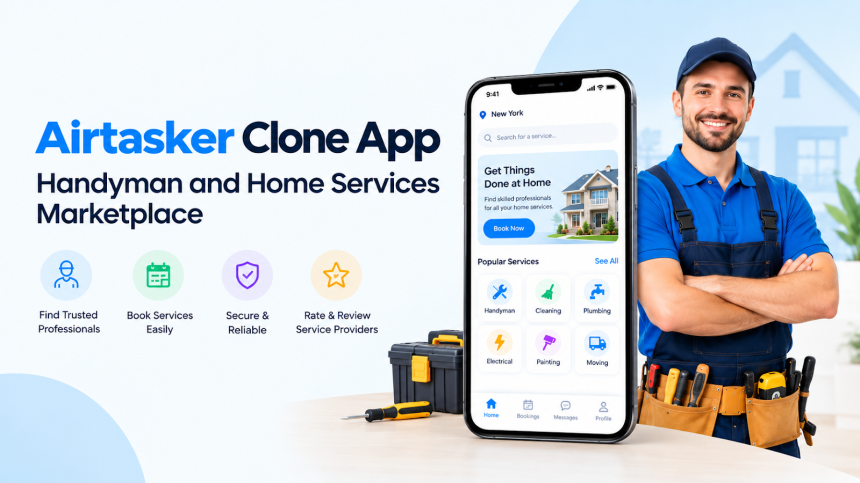
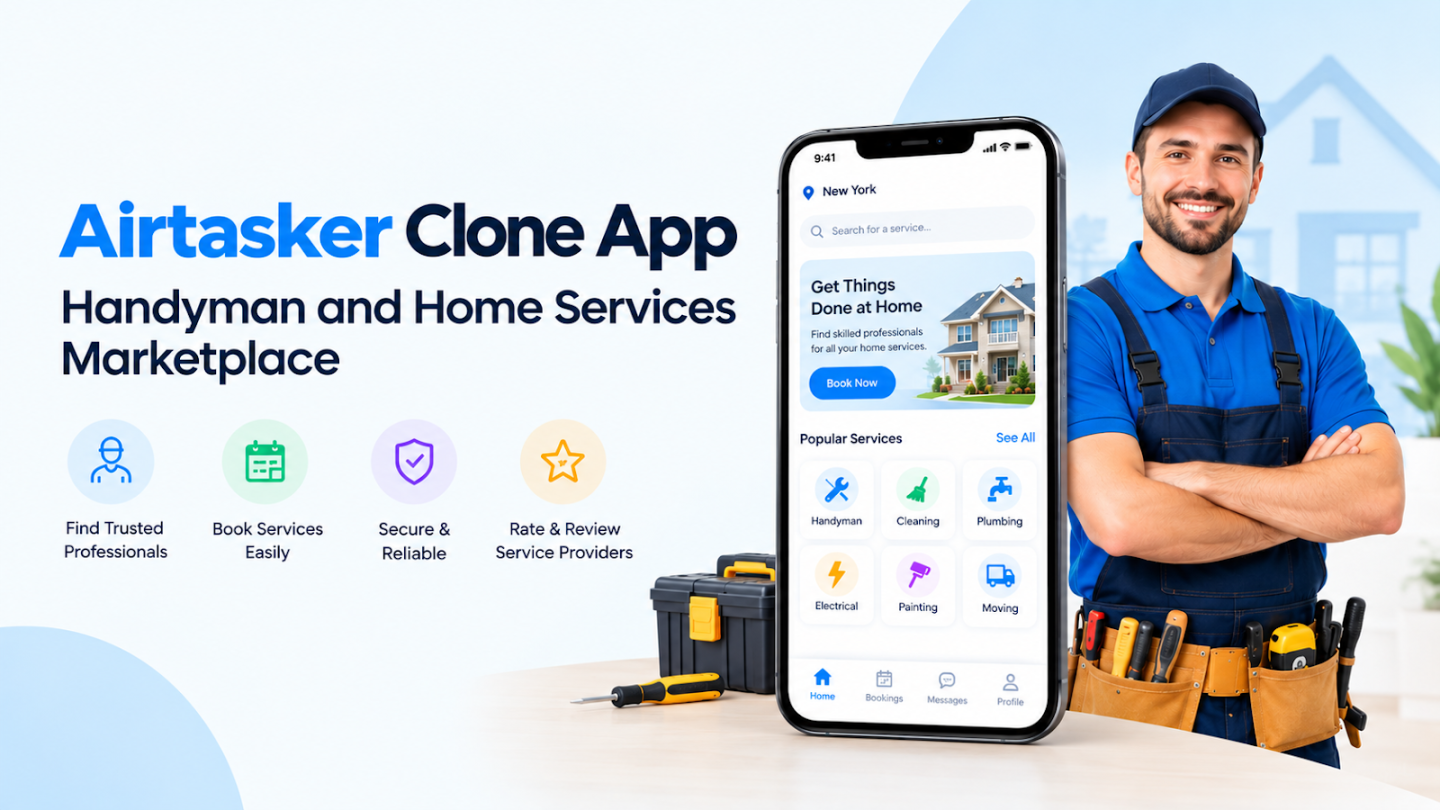
An Airtasker Clone App: Handyman and Home Services Marketplace is a digital platform that connects customers with skilled professionals who can complete everyday tasks, repairs, maintenance jobs, and home improvement projects. The concept is inspired by task marketplace platforms where users post a job, receive offers, compare providers, and choose the right person based on price, experience, ratings, and availability.
Demand for on-demand home services continues to grow as customers look for faster, more convenient ways to find reliable help. At the same time, handymen, cleaners, electricians, plumbers, movers, painters, and other independent professionals need effective tools to promote their services and manage bookings. A well-designed marketplace app can serve both groups through one connected platform.
An Airtasker clone app is a ready-to-customize marketplace solution modeled around the core functionality of task-based service platforms. It allows customers to describe a job, add a location and budget, attach images, and publish a service request. Registered professionals can then review available tasks, submit offers, communicate with customers, and complete the work through the app.
The app is not limited to basic handyman services. It can support a wide range of categories, including home cleaning, furniture assembly, appliance installation, gardening, moving assistance, painting, pest control, electrical work, plumbing, carpentry, and general maintenance. The business owner can configure categories, service areas, pricing rules, and commission structures according to the target market.
Unlike a traditional service directory, a task marketplace is built around interaction and transactions. Customers do not simply browse contact details. They can compare proposals, check provider profiles, make secure payments, track job progress, and leave reviews after completion. This creates a structured experience that can improve trust and increase repeat usage.
The customer journey usually begins when a user creates an account and searches for a relevant service. The customer enters a task title, explains the requirements, selects a preferred date, adds a location, and provides a budget or pricing preference. Photos and other attachments can help service providers understand the job before submitting an offer.
Once the request is published, suitable professionals receive notifications or discover it through category and location filters. Providers can review the job details, ask questions, suggest a price, and share their estimated completion time. The customer can compare several offers and select a provider based on multiple factors rather than choosing the first available listing.
After a provider is selected, both parties can communicate through in-app messaging. The job status can move through stages such as pending, accepted, in progress, completed, and cancelled. When the work is finished, the customer can approve completion, release payment, and submit a rating or review. This end-to-end workflow gives the platform control over the transaction and creates useful data for future improvements.
A successful home services marketplace must make it easy for customers to post tasks and find trustworthy professionals. The customer app should offer a simple registration process using email, phone number, or social login. Profile management should allow users to save addresses, payment methods, preferred service times, and previous job information.
The task posting flow should be detailed without becoming difficult to use. Customers need fields for service categories, task descriptions, location, budget, date, time, and image uploads. Smart prompts or category-specific questions can help customers provide the details needed for accurate quotations. For example, a plumbing request may ask about the type of leak, while a furniture assembly request may ask for the product dimensions.
- Service category and location search
- Filters for price, ratings, availability, and distance
- Provider profiles with skills, experience, reviews, and completed tasks
- Offer comparison and provider selection
- Real-time chat and push notifications
- Secure online payments and digital receipts
- Booking history and repeat service requests
- Job status updates and completion confirmation
- Ratings, reviews, and issue reporting
The customer interface should also support transparency. Users should see the total estimated cost, platform fees, cancellation terms, and payment status before confirming a booking. Clear information reduces disputes and helps customers make decisions with greater confidence.
Service providers need more than a profile page. They require practical tools that help them find suitable jobs, respond quickly, build credibility, and organize their schedules. During registration, providers may be asked to enter their skills, service categories, coverage area, working hours, rates, and professional experience.
Depending on the service category and local regulations, the platform may also support identity checks, license verification, insurance documents, background screening, and certificate uploads. Verification badges can help customers identify trusted professionals, while internal review tools allow administrators to approve or reject provider accounts.
A provider dashboard should make daily operations easier. Providers can browse nearby tasks, apply category and distance filters, submit quotes, manage bookings, update job statuses, and review earnings. Calendar integration can help prevent double bookings, while automated reminders reduce missed appointments.
- Professional profile and portfolio management
- Skill, category, and service area selection
- Job discovery with advanced filters
- Quote submission and price negotiation
- Availability calendar and booking management
- In-app messaging with customers
- Document and identity verification
- Earnings dashboard and payout tracking
- Ratings, reviews, and performance insights
- Notifications for new jobs and booking changes
The provider experience should be designed for speed. Many service professionals use their phones while traveling between jobs, so the app needs clear navigation, large touch targets, fast loading times, and concise notifications. A complicated workflow can cause providers to ignore job requests or move conversations outside the platform.
The admin panel is the control center of an Airtasker clone app. Administrators use it to manage customers, service providers, categories, bookings, payments, disputes, reviews, and promotional campaigns. A detailed dashboard can display total bookings, gross transaction value, platform revenue, active users, cancellation rates, and service demand by location.
Category management allows the business to add or remove services, define required information, and organize listings. For example, the platform may require license documentation for electrical work while allowing simpler registration for basic furniture assembly. Admins can also control service availability by city, region, or postal code.
Moderation tools are important for marketplace safety. Administrators should be able to review suspicious profiles, remove inappropriate content, investigate complaints, freeze accounts, and manage refund requests. A dispute management workflow can record evidence, messages, payment details, and decisions in one place.
The admin panel can also support commission configuration. The business owner may charge providers a percentage of each completed booking, add a customer service fee, offer subscription plans, or apply different rates by category. Analytics help identify which revenue model produces sustainable growth without discouraging customers or service providers.
Payments are central to the marketplace experience. The app should support reliable payment gateways that accept commonly used cards, digital wallets, and regional payment methods. Customers should be able to authorize payment through the platform, while providers receive funds according to the marketplace's completion and payout rules.
An escrow-style payment flow can improve trust between both sides. The customer's payment may be authorized when a booking is confirmed and released after the task is marked complete or a defined review period ends. The exact process should comply with local financial regulations and the policies of the selected payment provider.
Security must extend beyond payment processing. The platform should use encrypted data transmission, secure authentication, role-based access, and careful handling of personal information. Phone or email verification, profile badges, report buttons, and review moderation can reduce fraud and improve user confidence.
Dispute resolution is another key trust feature. Customers may report incomplete work, damage, late arrival, or a mismatch between the description and the delivered service. Providers may report unfair cancellations or payment disagreements. A structured resolution process protects the integrity of the marketplace and gives both parties a fair way to present their case.
The most common monetization model is a commission on completed transactions. The platform keeps a percentage of the booking value and transfers the remaining amount to the service provider. This model aligns platform revenue with marketplace activity, but the commission must be competitive enough to attract high-quality professionals.
A customer service fee can be added to each booking, either as a fixed charge or a percentage of the task value. Some platforms combine this fee with a provider commission. Pricing should be shown clearly before confirmation so users are not surprised by the final amount.
Other possible revenue streams include provider subscriptions, featured listings, advertising, lead fees, and premium verification packages. A provider subscription may offer more visibility, advanced analytics, reduced commission, or access to exclusive jobs. Featured listings can help professionals promote their profiles, provided that sponsored placement does not undermine search quality.
The best monetization strategy may vary by market and stage of growth. A new platform could begin with a moderate commission and limited promotional pricing to attract its first users. Once demand becomes consistent, it can introduce optional premium tools and business accounts for companies that manage multiple technicians.
Launching a minimum viable product can help validate the marketplace before investing in a large feature set. The first version should focus on the essential transaction cycle: registration, service profiles, task posting, offer submission, booking, messaging, payment, notifications, and reviews.
It is usually better to launch in a limited geographic area than to serve a large region without enough providers or customers. A focused launch allows the business to test category demand, understand common disputes, measure booking conversion, and improve the user experience based on real behavior.
The MVP should include an admin panel from the beginning. Manual approval, support intervention, and dispute handling may be necessary during the early stage. These operational insights can reveal which automation features should be developed next.
Future versions may add artificial intelligence for task categorization, automated price recommendations, image-based job analysis, route optimization, recurring bookings, business accounts, and integrations with accounting or customer relationship management software. These features should be prioritized according to user demand and measurable business value.
A scalable architecture is important because the platform may eventually handle thousands of users, service requests, messages, transactions, and notifications. A responsive web app, native mobile apps, or a cross-platform mobile solution can be selected according to budget, launch speed, and audience expectations.
The technology stack should support secure APIs, cloud hosting, database backups, media storage, payment integrations, push notifications, and analytics. Location-based features may require mapping services for address selection, distance calculation, provider discovery, and route planning.
Performance should be monitored from the first release. Slow search results, delayed notifications, or payment errors can damage trust quickly. Automated testing, error monitoring, access controls, and regular security reviews help maintain reliability as the marketplace grows.
Localization may also be necessary. A platform operating across multiple regions may need different currencies, tax settings, languages, payment methods, labor requirements, and service categories. Designing these elements as configurable settings can reduce the cost of future expansion.
A home services marketplace must solve the supply and demand challenge. Customers are unlikely to return if they cannot find available professionals, while providers will leave if there are too few jobs. Launch marketing should therefore focus on building a balanced network in selected categories and locations.
Local search engine optimization can attract customers looking for services such as emergency plumbing, house cleaning, appliance installation, or handyman assistance. Educational content, location pages, referral programs, social media campaigns, and partnerships with property managers can also generate demand.
On the provider side, direct outreach, trade associations, local advertising, and referral incentives can encourage skilled professionals to join. Clear explanations of fees, payout timing, verification requirements, and job quality can make the platform more attractive to reputable providers.
Retention depends on consistent service quality. Review monitoring, fast customer support, personalized recommendations, recurring bookings, loyalty rewards, and reliable notifications can encourage users to complete more transactions through the app. The platform should track acquisition cost, repeat booking rate, average order value, provider activation, cancellation rate, and dispute frequency.
An Airtasker Clone App: Handyman and Home Services Marketplace can provide a structured way for customers to hire skilled professionals and for service providers to find local work. Its value comes from combining task discovery, quotations, communication, booking management, secure payments, reviews, and administrative oversight in one digital environment.
The strongest platform strategy begins with a focused MVP, clear trust and safety procedures, transparent pricing, and a carefully selected launch market. As usage grows, advanced scheduling, analytics, automation, business accounts, and personalized recommendations can expand the product's capabilities. With the right technology and marketplace operations, an Airtasker-style app can become a scalable solution for modern home service transactions.
An Airtasker Clone App is a customizable handyman and home services marketplace that connects customers with service professionals through a single platform. Customers can post tasks, compare professionals, receive quotations, book services, make payments, and review completed jobs.
Customers can search for a service or post a custom task with their requirements, location, preferred schedule, and budget. Service providers can review available tasks and submit quotations. Customers can compare providers, confirm a booking, communicate with the professional, make payments, and provide feedback after the service.
Important features can include customer registration, service search and filters, task posting, quotation management, provider profiles, booking and calendar management, real-time notifications, secure payments, in-app chat, ratings and reviews, earnings management, service-provider verification, and an admin dashboard.
A handyman and home services marketplace can generate revenue through commissions on completed bookings, service or listing fees, provider subscriptions, featured listings, premium memberships, promotional advertising, and other marketplace charges. Businesses can combine suitable revenue models according to their target market and service strategy.
The cost depends on the number of features, customer and provider applications, admin functionality, UI/UX customization, payment and map integrations, chat, notifications, verification, security, third-party APIs, and ongoing maintenance. A detailed feature scope and business requirements are needed for an accurate development estimate.

Upto 6 month of service

100% certified professionals

Upto $5,000 against damages
Copyright © 2024 Digital Marketing Deal. All rights reserved.