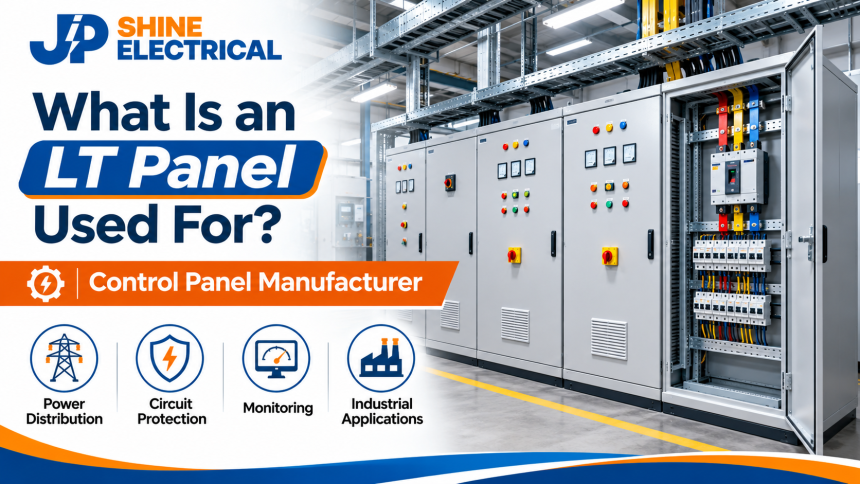
Electricity is an essential requirement for every industrial, commercial and infrastructure facility. From operating heavy machinery and production equipment to powering lighting systems, elevators and electrical appliances, businesses depend on a reliable power distribution network. Managing this electricity safely and efficiently requires properly designed electrical distribution equipment. One of the most important components in this system is an LT panel.
An LT panel, also known as a Low Tension panel, plays an important role in receiving, controlling and distributing low-voltage electrical power to different circuits and equipment. It helps organise electrical distribution while incorporating suitable protection and switching arrangements according to the installation requirements.
Businesses searching for a reliable Control Panel Manufacturer in Greater Noida should understand how LT panels work, where they are used and what factors matter when selecting one. This guide explains the purpose, applications and benefits of LT panels.
An LT panel is an electrical distribution panel designed to manage low-voltage power within an electrical installation. It receives electricity from an incoming supply and distributes it to multiple outgoing circuits through suitable switching and protective devices.
These panels generally contain components such as:
Circuit breakers
Busbars
Switchgear
Protective devices
Measuring instruments
Control and indication components
The configuration depends on the electrical load, number of outgoing feeders, installation environment and project specifications.
LT panels are commonly used in facilities where electricity needs to be distributed to multiple machines, departments, equipment or building systems.
LT panels perform several important functions in electrical infrastructure.
The primary function of an LT panel is to distribute low-voltage electrical power to different circuits and connected equipment. It helps manage the incoming supply and provides organised outgoing connections.
LT panels can incorporate suitable protective devices to help protect electrical circuits against conditions such as overloads and short circuits. The selection and coordination of these devices depend on the system design.
Switchgear and switching devices inside an LT panel allow authorised personnel to control electrical circuits according to operational requirements. This supports the management of different electrical loads.
Depending on its configuration, an LT panel may include measuring instruments that help monitor electrical parameters such as voltage, current and power.
An LT panel brings electrical distribution components together within a structured enclosure. This makes it easier for qualified technicians to inspect, operate and maintain the electrical distribution system.
LT panels are available in different configurations depending on the purpose of the installation.
A Main LT Panel receives the incoming low-voltage power supply and distributes electricity to downstream distribution panels and circuits.
An LT distribution panel distributes electrical power to different outgoing circuits. It is commonly considered for commercial buildings, factories and industrial facilities.
An MCC panel is designed to control and manage multiple motors used in industrial applications. Its configuration depends on the number and type of motors and their operating requirements.
A PCC panel is used for managing and distributing electrical power across different sections of an industrial or commercial installation.
An AMF panel is used in generator installations to manage the transfer between the mains supply and generator supply when the required operating conditions are met.
The appropriate panel type should be selected according to the electrical design and intended application.
Installing a properly designed LT panel offers several advantages for electrical infrastructure.
Organised power distribution: Helps distribute electricity through designated outgoing circuits.
Circuit protection: Supports the use of suitable protective devices for electrical circuits.
Centralised control: Brings switching and distribution components together.
Monitoring convenience: Allows electrical parameters to be monitored when suitable instruments are provided.
Maintenance accessibility: Provides a structured arrangement for inspection and maintenance.
Flexible configuration: Can be designed according to the electrical requirements of different facilities.
The actual performance and safety of an LT panel depend on correct design, component selection, installation and maintenance.
LT panels are used across several industries and building types where low-voltage power distribution is required.
Factories use LT panels to distribute electricity to production machinery, motors, control systems and other equipment.
Offices, shopping complexes, hotels and business centres require electrical distribution panels for lighting, elevators, air-conditioning and other building services.
Hospitals depend on organised electrical distribution systems to support lighting, equipment and essential building operations. Panel configurations must be designed according to the facility's electrical and backup-power requirements.
Schools, colleges and universities use electrical distribution panels to manage power across classrooms, laboratories, administrative areas and other facilities.
Warehouses, logistics facilities and infrastructure developments use LT panels to distribute electricity to lighting, equipment and operational systems.
Selecting the right manufacturer is an important part of planning an electrical installation. Businesses should evaluate technical capabilities, product construction and the manufacturer's understanding of project requirements.
Consider these factors before making a decision:
1. Technical understanding: The manufacturer should be able to understand electrical load requirements, single-line diagrams and project specifications.
2. Component quality: Discuss the selection of circuit breakers, busbars, switchgear and other electrical components.
3. Panel construction: Review enclosure material, internal arrangement, wiring, finishing and accessibility.
4. Safety and testing: Ask about inspection procedures, electrical testing and relevant documentation.
5. Customisation: Confirm whether the panel configuration can accommodate the required feeders, ratings, dimensions and operating conditions.
6. Project coordination: Discuss quotations, manufacturing schedules, delivery arrangements and technical support.
If you are looking for a Control Panel Manufacturer in Greater Noida, JP Shine Electrical is a brand to explore for electrical panel solutions.
An electrical installation does not depend on control panels alone. Proper cable routing is equally important for connecting panels, machinery and other electrical equipment.
Cable trays provide structured pathways for supporting and organising electrical cables. They are available in different configurations, including perforated and ladder types, depending on cable load and installation requirements.
For projects involving cable management, businesses can explore a Cable Tray Supplier in Bastar or a Cable Tray Supplier in Bilaspur.
A properly planned combination of electrical panels and cable tray systems can contribute to a more organised installation. Cable tray selection, cable separation, support spacing and load capacity should be evaluated as part of the overall electrical design.
The main purpose of an LT panel is to receive and distribute low-voltage electrical power to different circuits while providing suitable switching, control and protection arrangements.
LT panels are designed for low-voltage electrical distribution, whereas HT panels are used for higher-voltage electrical systems. Their applications, equipment and safety requirements differ.
LT panels are commonly installed in factories, commercial buildings, hospitals, educational institutions, warehouses and infrastructure facilities.
Depending on its design, an LT panel may include circuit breakers, busbars, switchgear, protective devices, measuring instruments and control components.
Evaluate the manufacturer's technical understanding, component selection, panel construction, testing procedures, customisation options and project coordination before placing an order.
LT panels are an important part of modern electrical infrastructure. They help distribute low-voltage power, manage electrical circuits and provide suitable switching and protection arrangements for industrial and commercial installations.
Choosing the right panel requires careful evaluation of electrical load, component specifications, enclosure construction and installation requirements. If you are searching for a Control Panel Manufacturer in Greater Noida, explore top control panel manufacturer in india - jp shine electrical offerings and compare the available solutions with your project's technical specifications.
Proper electrical panel selection, combined with organised cable management, can help create a structured and maintainable electrical distribution system.
Copyright © 2024 Digital Marketing Deal. All rights reserved.



 Facebook
 Twitter
 WhatsApp